

How to Make Authentic Pizza Salami the Italian Way

The first time I ordered a pizza salami in Milan, the slices that arrived on top of the pizza were rust red, coarsely ground, dotted with black peppercorns and small flecks of white fat, and tasted of garlic, wine, and time. It was nothing like the pepperoni pizza I had grown up calling salami pizza. This pizza salami recipe is exactly how I have learned to make it at home, with the real Italian cured salami it deserves, and it is a pizza that quietly outclasses every American pepperoni pie I have ever eaten.
What Is Pizza Salami?
Pizza salami is a classic Italian pizza built on a Margherita foundation of San Marzano tomato sauce and fior di latte mozzarella, topped with thinly sliced authentic Italian cured salami. The salami can be mild (Salami Milano) or spicy (salame piccante), coarsely ground (Salami Napoli) or fennel forward (finocchiona), but the key is that it is real Italian dry cured pork salami, not American pepperoni.
The pizza is simple, bold, and savory in the way only properly aged cured meat can deliver. It is one of the most ordered pizzas in Italian pizzerias and one of the most misunderstood when translated to English speaking menus.
The Italian Tradition of Salami on Pizza
Italian salami making is one of the oldest charcuterie traditions in Europe, with regional varieties developed over centuries in nearly every Italian province. Salami Milano from Lombardy. Salami Napoli from Campania. Soppressata from Calabria. Finocchiona from Tuscany. Salame piccante from across the south. Each is a distinct product with its own grind, spice profile, and aging period.
Putting salami on pizza was a natural extension of Italian working class cooking. Cured meats keep without refrigeration. Pizza is a foundation for almost anything good. The combination of San Marzano sauce, fresh cheese, and dry cured salami became a Neapolitan and Roman staple by the early 20th century. Today, pizza salami appears on virtually every classic Italian pizzeria menu, often listed simply as “salame” with the specific variety identified.
Pizza Salami vs Pepperoni Pizza: The Important Difference
Salami Is Italian, Pepperoni Is American
This is the most important distinction in the entire article. Pepperoni is an American product invented by Italian American butchers in the early 20th century, heavily seasoned with paprika and fennel, with a specific industrial processing and texture. The word “pepperoni” does not exist in Italian as a meat term. Ask for pepperoni in Italy and you will be served bell peppers (peperoni). Real Italian salami is a different product entirely.
Flavor and Spice Profile Differences
American pepperoni leads with paprika and a smoky character that dominates whatever it is on. Italian salami is more subtle and complex, with garlic, black pepper, wine, and slow aging producing a deeper, more nuanced flavor that supports rather than overwhelms the rest of the pizza. The two products taste fundamentally different.
Texture and Curl Behavior in the Oven
American pepperoni, particularly the natural casing variety, curls into small cups during the bake with crisp charred edges. Italian salami lies flatter, develops a glossy surface as its fat melts, and stays more tender across the entire slice. The mouthfeel is different. Pepperoni eats crisp. Salami eats supple.
Why They’re Often Confused
In American and Australian English, “salami pizza” often refers to what Italians would call salame style pizza but is functionally pepperoni. The confusion has spread to many international menus. If you order a salami pizza in a typical American chain pizzeria, you will receive pepperoni. If you order it in Naples, you will receive what this recipe describes. The Italian version is what this article is about.
Authentic Pizza Salami Toppings Explained
Salami Milano: The Mild Classic
Salami Milano is the most internationally recognized Italian salami, with a fine grind of pork and pork fat, mild seasoning of garlic, white pepper, and white wine, and aging of 4 to 6 months. The flavor is balanced and approachable, the texture firm and silky. This is the default salami for pizza if you are unsure which to use.
Salami Napoli: The Coarse Ground Italian Favorite
Salami Napoli features a coarser grind than Milano, with visible chunks of fat and meat and a slight smoky character from the curing process. The flavor is more rustic and slightly more aggressive than Milano. Particularly good on pizzas that want a more textural cured meat experience.
Salame Piccante and Soppressata: The Spicy Options
For heat, salame piccante (the generic spicy salami) or soppressata piccante (the Calabrian version) bring a fiery kick from Calabrian chilies. These are the salamis used on a pizza diavola. The flavor is rich, peppery, and complex, with the heat building rather than hitting blunt and fast.
Finocchiona: The Fennel Infused Tuscan Salami
Finocchiona is a Tuscan salami flavored with whole fennel seeds, which give it a distinctive licorice and anise note that pairs beautifully with cheese and tomato. It is the underrated star of Italian salamis and one of my favorite choices for a pizza salami when I want something distinctive.
Cheese Pairings: Fior di Latte vs Buffalo Mozzarella
Fior di latte is the everyday cheese for pizza salami. Its mild milky character supports the salami without competing. Mozzarella di bufala adds richness and tang that pairs beautifully with the stronger salamis like soppressata or finocchiona. Both are correct. Fior di latte is more accessible.
Optional Additions: Olives, Capers, Chili Flakes
A scatter of Taggiasca olives, a few rinsed capers, or a pinch of dried Calabrian chili flakes can elevate a pizza salami. Each adds a layer of complexity. Pick one or two, not all three. A pizza salami at its purest is just the salami, the cheese, the sauce, and a finishing drizzle of olive oil.
For a more generously topped pizza with cured ham, mushrooms, and olives together, our pizza capricciosa recipe is the natural next step.
How to Choose the Right Salami for Pizza
Thin Sliced vs Thick Cut Salami
Thin sliced is the answer for pizza, ideally 1 to 2 millimeters thick. Thinner slices warm through quickly during the bake, allow the fat to render gently into the cheese, and produce the silky melted texture that defines a good pizza salami. Thick slices stay chewy in a 90 second bake and dominate every bite they appear on.
If buying from a deli counter, ask for the salami sliced “thin enough to see through” or use the Italian “fettine sottilissime” if the deli speaks Italian. About 3 to 4 slices per pizza is the right amount, more than enough to deliver flavor without overwhelming the pizza.
Mild vs Spicy: Picking Your Heat Level
Salami Milano and Salami Napoli for a mild, classic pizza salami. Salame piccante or soppressata for genuine heat. Finocchiona for an aromatic, fennel forward variation that splits the difference. Most Italian delis carry several varieties. Tasting a thin slice before buying is a privilege of in person shopping that you should always take advantage of.
Where to Buy Authentic Italian Salami
Italian delis and specialty stores are the best source. Many high end supermarkets now carry properly labeled Italian salami in the deli case, sliced to order. Look for the country of origin clearly listed as Italy. Avoid pre packaged “salami” in plastic trays unless the brand is reputable (Citterio, Volpi, Fra’Mani). Avoid anything labeled “salami” that is actually pepperoni style with the spicy red color of paprika.
Should Salami Be Added Before or After Baking?
Before. Always before for an authentic pizza salami. The salami warms through during the bake, its fat melts and integrates with the cheese, and the surface develops a slight glossy sheen. Adding it after the bake produces a cold cured meat on top of hot pizza, which is closer to a pizza prosciutto with raw prosciutto crudo. They are different pizzas with different techniques.
The Base: Dough and Sauce
A classic 24 hour cold fermented Neapolitan dough is the foundation for pizza salami, with a simple hand crushed San Marzano sauce. The pizza works equally well on a thin and crispy pizza tonda romana base if you prefer the Roman style. For this recipe, I use the Neapolitan style with traditional fior di latte. The complete dough method, hydration ratios, and sauce technique are covered in my dedicated Italian pizza dough recipe and San Marzano pizza sauce guide.
How to Assemble Pizza Salami
Layering the Sauce and Mozzarella
Sauce first, applied in a thin spiral with the back of a spoon, leaving a finger width border. Then fior di latte torn into loose pieces and scattered across the sauce. The cheese should be sparse enough to leave visible sauce showing through. A heavy cheese layer fights the delicate flavor of the salami.
Arranging Salami Slices Evenly
Lay the salami slices flat across the cheese, slightly overlapping but not stacked. Eight to ten slices for a 12 inch pizza is the right amount. The slices should cover most of the pizza surface without being piled. Each bite should contain salami without it dominating every other ingredient.
Under Cheese or On Top? The Italian Way
The traditional Italian way is salami on top of the cheese, not buried under it. The salami slices need direct exposure to the oven heat to release their fat and develop the glossy melted surface. Burying them under cheese steams them and prevents proper rendering. This is the opposite of how American pepperoni pizzas are sometimes built.
Avoiding a Greasy Pizza
Three rules. Use thin sliced salami (1 to 2 millimeters), not thick cut. Use less salami than feels generous. Drain the cheese on paper towels for 20 minutes before topping. Following all three produces a clean, balanced pizza salami rather than the greasy mess that many home versions become.
Expert Tips for an Authentic Pizza Salami
The single most impactful improvement is buying real Italian salami sliced fresh at a deli counter rather than pre packaged supermarket “salami.” The difference is genuinely significant. The fresh sliced version retains moisture, slices thinner, and renders fat more gracefully during the bake.
Bring the salami to room temperature 15 minutes before topping the pizza. Cold salami straight from the deli wrap is stiff and releases less fat during the bake. Room temperature salami melts into the pizza more gracefully and integrates better with the cheese.
Here is the technique I learned from a Milanese pizzaiolo and almost never see in writing. After topping the pizza but before baking, drizzle a tiny amount of olive oil directly onto the salami slices themselves (not the whole pizza, just the salami). The oil helps the salami slices retain moisture during the bake and amplifies the fat rendering. The salami emerges glossier and more flavorful. A teaspoon of olive oil across 10 slices is enough.
Use a fennel forward salami like finocchiona occasionally rather than always defaulting to Salami Milano. The fennel notes interact beautifully with tomato and cheese in a way that surprises people unfamiliar with the variety. It is the kind of small change that elevates a pizza salami from familiar to memorable.
Slice the pizza in such a way that each piece contains 2 to 3 salami slices. The visual matters. A slice with one piece of salami looks under topped. A slice with five looks crowded. Two to three is the visual sweet spot.
Common Mistakes to Avoid
Confusing Salami With Pepperoni
The most common and consequential mistake. American pepperoni produces an American style pizza, not an Italian pizza salami. The flavor profile and texture are different enough that the two products are not interchangeable. Source real Italian salami for an authentic result.
Using Low Quality Pre Sliced Salami
Pre packaged supermarket salami in plastic trays is often dry, over salted, and lacking the moisture and fat that make Italian salami special on a pizza. Buy from a deli counter where the salami is sliced fresh to order whenever possible.
Overloading With Too Many Slices
Eight to ten slices for a 12 inch pizza is plenty. Twelve or more produces a heavy, greasy pizza that cannot bake evenly. The salami should be visible and identifiable in each bite, not blanket the entire surface.
Slicing Salami Too Thick
Thick slices stay chewy in a 90 second bake, dominate every bite, and lose the silky melt that makes the technique special. Always thin slice, ideally 1 to 2 millimeters. Ask the deli to slice as thin as their machine allows.
Popular Pizza Salami Variations
Classic Pizza Salami Milano
The baseline. San Marzano sauce, fior di latte, 8 to 10 thin slices of Salami Milano. Bake. Finish with a drizzle of olive oil. The version to master first and the one most pizzerias serve as a default.
Pizza Salame Piccante: Spicy Salami
Replace the Salami Milano with Calabrian salame piccante or soppressata piccante. Add a few sliced Calabrian chilies before baking and finish with chili infused olive oil. This is essentially a pizza diavola in many Italian pizzerias.
Pizza Salami and Mushroom
The classic combination. Add 60 grams of sautéed cremini or porcini mushrooms scattered across the cheese before topping with the salami slices. The earthy mushrooms and the rich salami make this one of the most balanced pizzas in the Italian canon.
Pizza Salami With Honey and Chili: Sweet Spicy
The modern variation that has taken over Italian American pizzerias in the last decade. Classic pizza salami, baked, then finished with a drizzle of hot honey across the surface immediately after pulling. The sweet honey amplifies the heat of the salami rather than canceling it.
Pizza Salami Bianca: White, No Tomato
Skip the tomato sauce. Brush the dough with olive oil, top with fior di latte and a thin layer of ricotta or mascarpone, then the salami slices. Bake. Finish with fresh arugula and a squeeze of lemon. The absence of tomato lets the salami flavor lead in a different way.
Pizza Salami and Burrata: Gourmet Style
The classic pizza salami, baked, with a torn ball of burrata placed in the center after pulling from the oven. The cool, creamy burrata against the warm spicy salami is one of the great pizza pairings. Add a drizzle of estate olive oil and fresh basil to finish.
Pizza Salami With Rocket and Parmesan
Bake the classic pizza salami. After pulling, top with a handful of arugula tossed in olive oil and lemon, plus shavings of Parmigiano Reggiano. The peppery greens cut through the rich salami beautifully. A particularly Italian American restaurant style preparation.
Serving Suggestions
Best Italian Wines to Pair
A young Chianti Classico from Tuscany is the most reliable match for pizza salami, with bright cherry fruit and firm tannins that handle the cured meat and cheese in balance. A Barbera d’Alba from Piedmont is the slightly more elegant alternative. A young Lambrusco, the slightly sparkling red of Emilia Romagna, is the casual local pairing in much of northern Italy and is genuinely brilliant with salami. For white, a Vermentino or a Friulano work well, though red is the more traditional match.
Side Dishes and Antipasti
A simple green salad with arugula, lemon, and olive oil is the right companion. A small antipasto plate of olives, marinated artichokes, and pickled vegetables. Italian fritti like supplì or arancini make excellent starters. Avoid heavy or creamy sides that compete with the richness of the pizza.
Storage and Reheating Instructions
Storing Leftover Pizza Salami
Leftover pizza salami keeps in the fridge for up to 2 days in a covered container in a single layer. The salami actually develops more flavor overnight, which makes pizza salami one of the better pizzas for leftovers. Wrap loosely in parchment, not directly with plastic wrap which can make the cheese gummy.
Best Way to Reheat Without Drying the Salami
A dry skillet over medium heat, covered for the first minute and uncovered for the second. The covered first minute traps steam to warm the salami without drying it. The uncovered second minute crisps the bottom. A 425 degree oven for 6 to 7 minutes directly on the rack works equally well. The microwave dries the salami aggressively and concentrates the salt unpleasantly. Avoid it.
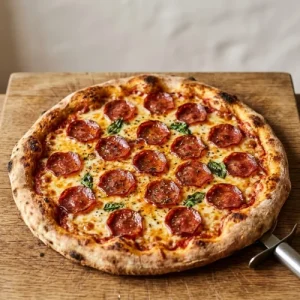
Easy Pizza Salami Recipe

Equipment
- Pizza stone or pizza steel
- Pizza Peel
- Kitchen scale
- Lidded proofing containers
- Sharp knife & cutting board
- Large Mixing Bowl
- Pastry brush
- Paper towels
Ingredients
- 500 grams Caputo 00 flour 325 grams water at room temperature 10 grams fine sea salt 0.3 grams instant dry yeast about an eighth of a teaspoon
- 400 gram can whole San Marzano DOP tomatoes 1 teaspoon fine sea salt 1 small drizzle extra virgin olive oil
- 80 to 100 grams fior di latte torn and drained 20 minutes on paper towels 8 to 10 thin slices of Salami Milano (or Salami Napoli, finocchiona, or salame piccante for variations), sliced 1 to 2 millimeters thick 1 teaspoon extra virgin olive oil, for drizzling on the salami before baking 1 teaspoon extra virgin olive oil, for finishing after the bake Fresh basil leaves, for garnish Pinch of flaky sea salt
Instructions
Make the Dough
- Combine flour and water in a large bowl. Stir with your hand until no dry flour remains. Cover and rest 30 minutes (autolyse).
- Add salt and yeast. Squeeze through the dough with your fingers until fully incorporated.
- Knead in the bowl using stretch and fold for 5 minutes until smooth and slightly tacky.
- Cover and bulk ferment at room temperature for 1 hour.
- Divide into 2 balls of roughly 420 grams each. Shape into tight smooth balls by tucking the edges underneath.
- Place in lightly oiled lidded containers. Refrigerate 24 to 72 hours.
- Remove from the fridge 2 hours before baking.
Prepare the Sauce
- Crush the San Marzano tomatoes by hand in a bowl until you have a textured purée.
- Add salt and olive oil. Stir and taste. The sauce should be bright, salty, and slightly acidic.
- Refrigerate until ready to use.
Assemble the Pizza
- Tear the fior di latte into rough pieces and drain on paper towels for 20 minutes.
- Remove the salami slices from the fridge 15 minutes before baking and lay them flat on a plate at room temperature.
- Flour the work surface lightly. Press a dough ball flat from the center outward with your fingertips, leaving the rim untouched.
- Lift and drape over your knuckles. Rotate gently to stretch into a 12 inch round.
- Transfer to a well floured peel. Shake gently to confirm the pizza is loose.
- Spread 2 to 3 tablespoons of sauce in a thin spiral, leaving a finger width border.
- Scatter the drained fior di latte in loose pieces across the sauce.
- Lay 8 to 10 salami slices flat across the cheese, slightly overlapping but not stacked.
- Drizzle a teaspoon of olive oil directly onto the salami slices (not the whole pizza, just the salami).
Bake and Serve
- Home oven: preheat pizza steel at maximum temperature (500 to 550 degrees Fahrenheit) for at least 45 to 60 minutes. Slide the pizza onto the steel and bake 8 to 10 minutes until the cornicione is puffed and beginning to char, the cheese is fully melted with golden blistered spots, and the salami slices are glossy with rendered fat and slightly darkened at the edges.
- Wood fired oven: bake at 850 degrees Fahrenheit on the floor for 60 to 90 seconds, rotating every 20 seconds with a turning peel.
- Pull the pizza onto a cutting board.
- Drizzle the finishing olive oil lightly across the surface.
- Tear fresh basil leaves over the top. Add a pinch of flaky sea salt.
- Slice with a wheel or kitchen shears and serve immediately.
Notes
- Drizzle a small amount of olive oil directly onto the salami slices before baking. This technique from a Milanese pizzaiolo amplifies the fat rendering, helps the salami retain moisture, and produces a glossier, more flavorful finished result. One teaspoon across 10 slices is enough. Almost no recipe mentions this step.
- Bring the salami to room temperature 15 minutes before topping the pizza. Cold salami from the deli wrap is stiff and releases less fat during the bake. Room temperature salami melts into the pizza more gracefully.
- Buy real Italian salami sliced fresh at a deli counter rather than pre packaged supermarket salami. The difference in moisture content, slice thinness, and flavor is significant. Pre packaged often substitutes American pepperoni style products labeled as salami.
- Place the salami on top of the cheese, not under it. The salami needs direct exposure to oven heat to render its fat and develop the glossy melted surface. Burying it under cheese steams it rather than renders it.
- Slice thin. 1 to 2 millimeters thick is the target. Ask the deli to slice as thin as their machine allows. Thicker slices stay chewy in a short bake and dominate every bite.

Delicious and easy-to-follow recipe! The salami turns out perfectly crisp on the edges with rich, smoky flavor, and the cheese melts beautifully over the crispy crust. Tastes just like a real pizzeria-style pizza. Absolutely loved it and will make again!
The instructions for stretching the dough and picking real Italian salami were incredibly precise. My homemade pizza had that perfect, authentic gloss and a genuinely rich texture!
The combination of San Marzano sauce and authentic Salami Milano delivers a deep, rustic flavor. It is a stunning, beautifully balanced recipe that beats pepperoni every time!
The Milanese trick of drizzling oil on the meat kept the salami incredibly tender. It is a brilliant, subtle touch that completely elevates a homemade pie!
The technique of layering the salami on top of the cheese ensures the fat renders beautifully. The surface gets incredibly glossy without making the crust soggy at all!
The 24-hour cold fermentation dough paired with authentic Salame Piccante created an absolute masterpiece. It tastes exactly like a real pizzeria in downtown Naples!
The step-by-step dough fermentation and authentic topping guide worked like magic. Each slice had the perfect balance of glossy, melt-in-your-mouth Italian flavor!
Draining the fior di latte and using thin-sliced Salami Milano made all the difference. No grease at all, just pure, authentic Neapolitan perfection!
Using room temperature Finocchiona completely elevated the flavor profile! This recipe effortlessly bridges the gap between home cooking and an authentic Milanese pizzeria.
The tip to drizzle olive oil directly on the salami before baking is a game-changer! My pizza turned out incredibly glossy, perfectly savory, and truly authentic.