

How to Make Omakase Sauce at Home

The first time a sushi chef slid a piece of nigiri across the counter already brushed with his own sauce, I understood that the fish was only half the story. That dark, glossy glaze tasted of the sea, of warmth, of something deeper than soy sauce could ever manage alone. I went home a little obsessed, and after dozens of batches I finally cracked it.
This omakase sauce recipe is the result, and it brings that exact sushi counter flavor into your own kitchen with a handful of pantry staples. If you want a balanced, savory, lightly sweet Japanese sauce that makes simple rice, fish, or vegetables taste restaurant worthy, you are in the right place. Let me show you how to build it properly.
How to Make Omakase Sauce (Step Overview)
The method is genuinely simple. You combine, you season, you simmer gently, and you strain. The whole thing takes under half an hour, and most of that is cooling time. Here is each stage in detail.
Combining the Liquid Base
Start by adding your soy sauce, mirin, sake, and sugar to a small saucepan, and stir them together before any heat goes on. Stirring the sugar in while everything is cold helps it dissolve evenly and means it will never scorch on the bottom of the pan.
Adding Aromatics & Sweetener
Next, stir in your dashi, the grated ginger and garlic, and the few drops of sesame oil. If you are adding any optional extras like rice vinegar for brightness or oyster sauce for richness, this is the moment for them. Everything goes into the pan together so the flavors can meld from the start.
The Gentle Simmer (Never Boil)
Place the pan over low to medium low heat and let it come to a gentle simmer, stirring often. This is the single most important step. You want lazy little bubbles around the edge, never a hard rolling boil. Five to seven minutes is plenty. Gentle heat keeps the flavors clean, cooks off the raw alcohol, and coaxes the sauce into that signature glossy shine.
Straining for a Smooth or Rustic Finish
Once it is done, take it off the heat and let it rest for about ten minutes. Then decide on your texture. Strain out the ginger, garlic, and any kombu or bonito for a silky, smooth, restaurant style sauce, or leave the solids in for a more rustic, homestyle finish. Both are delicious. It simply depends on the mood and the dish.
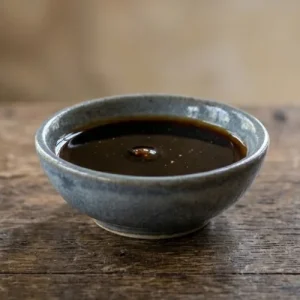
Easy Restaurant-Style Omakase Sauce

Equipment
- Small saucepan
- Whisk or spoon
- Grater
- Fine mesh strainer
- Clean glass jar or squeeze bottle
Ingredients
- ½ cup soy sauce
- ¼ cup mirin
- ¼ cup sake
- 1 tbsp sugar or honey
- ¼ cup dashi stock or 1 strip kombu plus a few bonito flakes
- ½ tsp fresh ginger grated
- 1 garlic clove grated or minced
- 1 tsp sesame oil
- 1 tsp rice vinegar for brightness
- 1 tbsp oyster sauce for extra richness
- Pinch of chili flakes for heat
Instructions
- Combine the base. In a small saucepan, add the soy sauce, mirin, sake, and sugar. Stir everything together before turning on the heat so the sugar dissolves evenly.
- Add the umami and aromatics. Stir in the dashi stock (or add the kombu strip and bonito flakes). Add the grated ginger, garlic, and sesame oil. If using rice vinegar or oyster sauce, add them now.
- Simmer gently. Place the saucepan over low to medium-low heat and let the sauce simmer gently for 5 to 7 minutes, stirring often. Do not let it boil hard, as gentle heat keeps the flavors clean and turns the sauce glossy.
- Taste and adjust. Taste carefully. Add more sugar if it is too salty, or a splash of water if it is too strong. Add chili flakes now if you want heat.
- Strain and store. Remove from the heat and let it sit for 10 minutes. Strain out the solids for a smooth sauce, or leave them for a rustic finish. Pour into a clean glass jar or squeeze bottle, and cool completely before refrigerating.
Notes
- Never boil the sauce hard. A gentle simmer keeps the flavors clean and gives that signature glossy shine.
- Stir the sugar in before heating so it dissolves evenly and never scorches on the bottom of the pan.
- Dashi is the secret weapon. It gives that deep, ocean-like umami that separates omakase sauce from plain soy sauce, so do not skip it if you can help it.
- Go easy on the sesame oil. It is powerful, and too much will mask the delicate mirin sweetness.
- Make it a day ahead when you can. The flavor deepens overnight in the fridge and tastes noticeably rounder the next day.

This omakase sauce recipe is incredible rich, glossy, perfectly balanced, and honestly tastes like something straight from a high-end sushi bar. The dashi adds such amazing depth, and the homemade flavor is on another level!
Absolutely loved how this recipe breaks down the art behind omakase sauce while keeping it easy enough for home cooks to master.
This recipe captures the depth and elegance of restaurant-style Japanese flavors perfectly. A fantastic guide that makes a complex sauce feel surprisingly approachable!
A beautifully written recipe that goes beyond the ingredients and explains the tradition behind the sauce. Simple, authentic, and incredibly useful!
Brilliant framework and so forgiving! The step-by-step tips made it effortless to achieve that gorgeous, glossy restaurant shine on my first try.
So simple yet so deep in flavor! The perfect blend of sweet and savory that instantly elevates any homemade rice bowl or nigiri.
Incredibly easy to follow and the flavor is unmatched! This sauce brings that authentic, rich sushi counter glaze right to my own kitchen.
Finally, a recipe that cracks the code on authentic nikiri glaze! It’s perfectly balanced, glossy, and makes everything taste premium.
This recipe is a game-changer! The dashi tip gives it that authentic, glossy depth, making simple homemade fish taste restaurant-worthy.
Absolutely perfect recipe! The balance of sweet, salty, and umami is spot on, making it taste exactly like a high-end sushi counter at home.