

How to Make Lemon Balm Tea Calming Citrus-Herb Recipe

The first time I crushed a fresh lemon balm leaf between my fingers, the smell stopped me mid step in my own garden. Bright lemon, a whisper of mint, something green and calming all at once. I brought a handful inside, poured hot water over it, and five minutes later I had the most soothing cup I had tasted in years. That single cup is why I now grow three plants just for tea.
This is the lemon balm tea recipe I have made hundreds of times since, and it is genuinely one of the easiest, most rewarding drinks you can make at home. If you want a warm, gentle, naturally caffeine free cup that helps you unwind at the end of a long day, you are in exactly the right place. Let me walk you through every step so your very first cup tastes the way it should.
How to Make Lemon Balm Tea (Step Overview)
Here is the simple flow, and then I will break down each piece. Heat your water, add your leaves, cover, steep, strain, and sip. That is genuinely all there is to it. The details below are what take it from fine to wonderful.
Choosing the Right Water Temperature
Aim for water just off the boil, around 90 to 95 degrees Celsius, or 195 to 205 degrees Fahrenheit. If your kettle has no temperature setting, bring it to a boil, then let it sit for thirty to sixty seconds before pouring. Water that is too hot scorches the delicate leaves and drives off the very aromatic oils you are trying to capture, leaving a flatter, slightly bitter cup.
The Ideal Steeping Time for Lemon Balm
Five minutes is the sweet spot for most cups. That is long enough to draw out the flavor and the beneficial compounds, but short enough to stay sweet and smooth. If you are using fresh leaves and want a more robust cup, you can stretch it to seven minutes. Beyond that, you start trading flavor for bitterness.
Why You Shouldn’t Over-Steep
I learned this the hard way early on, leaving a pot to steep while I got distracted by a phone call. Twenty minutes later the tea had turned sharp, astringent, and grassy in the worst way. Unlike black tea, where a strong brew can still be tamed with milk, an over steeped herbal tea simply tastes harsh. Set a timer. Your patience is rewarded by stopping at the right moment, not by waiting longer.
Covering the Cup to Retain Beneficial Oils
This is the single tip that improved my tea the most, and almost nobody mentions it. Always cover your cup or pot while it steeps, with a saucer, a lid, or anything that traps the steam. The aromatic oils that carry the lemon flavor and the calming aroma are volatile, which means they evaporate with the rising steam. Cover the cup and that fragrant steam condenses and drips right back into your tea instead of drifting off into the kitchen. Uncovered, you are literally pouring your best flavor into the air.
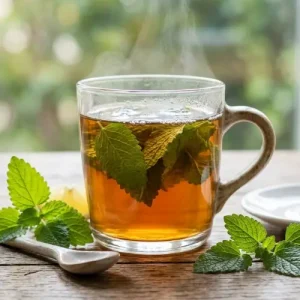
Easy Calming Lemon Balm Tea

Equipment
- Kettle or small saucepan
- Teapot or mug
- Tea infuser or fine mesh strainer
- Teaspoon
- Lid or small saucer
Ingredients
- 1 cup 240 ml filtered water
- 1 tablespoon fresh lemon balm leaves bruised (or 1 to 2 teaspoons dried lemon balm)
- 1 teaspoon honey optional, to taste
- 1 thin slice fresh lemon optional
- 1 sprig fresh mint optional, for serving
Instructions
- Heat the water until it is just off the boil, around 90 to 95 degrees Celsius (195 to 205 degrees Fahrenheit). If your kettle has no temperature control, bring it to a boil and let it rest for 30 to 60 seconds.
- While the water heats, rinse the fresh lemon balm leaves and bruise them gently in your hand or with the back of a spoon to release their oils. If using dried lemon balm, simply measure it into your infuser.
- Place the leaves in your mug, teapot, or infuser. Pour the hot water over them.
- Cover the cup or pot immediately with a lid or saucer and steep for 5 minutes. Do not skip the cover, as it traps the aromatic oils.
- Remove the leaves or lift out the infuser. Strain if needed so no leaf is left sitting in the cup.
- Stir in honey and a squeeze of lemon if using, once the tea has cooled slightly. Garnish with a sprig of mint and serve warm.
Notes
- Bruise fresh leaves before steeping. That gentle crushing is what unlocks the bright lemon oils, and it is the difference between a vivid cup and a pale one.
- Always cover while steeping. The flavor and aroma live in volatile oils that escape with the steam, so trapping that steam keeps them in your cup.
- Be generous with the leaf. Lemon balm is mild, and a weak, watery cup is the most common mistake. Use more than you think you need.
- Watch the clock. Five minutes is ideal. Over steeping turns a sweet cup harsh and grassy, so set a timer and strain on time.
- Let the water cool for a moment before pouring. Water straight off a rolling boil scorches delicate herbs and flattens the flavor.

Absolutely loved this Lemon Balm Tea recipe! So calming, refreshing, and easy to make. The fresh lemony aroma is amazing, and the tips made the tea taste perfect. A new evening favorite for me!
The perfect blend of simple instructions and expert tips! It made brewing my first calming cup incredibly easy and delicious.
Highly recommend this guide! The storage tips are incredibly useful for keeping both fresh and dried leaves perfectly fragrant.
Perfect and straightforward recipe! Bruising the fresh leaves beforehand gave my tea the most vibrant, calming citrus flavor.
The chamomile and ginger variations sound amazing! This is hands down the ultimate guide to a perfectly soothing evening cup.
Incredibly helpful guide! Knowing the exact leaf-to-water ratio made my very first cup taste absolutely amazing.
Such a lovely and easy-to-follow recipe! Covering the mug to trap the aromatic oils made my tea taste absolutely perfect.
This guide is fantastic! The tip to let the boiled water rest for a minute completely saved my tea from turning bitter.
The tip about water temperature and bruising the leaves is a game-changer! My cup turned out incredibly soothing and flavorful.
Loved the simple breakdown of fresh vs. dried leaves! This is exactly the calming, caffeine-free guide I needed for a perfect evening routine.