

Easy Easter Recipes for the Whole Family (2026)

Easter is one of the most joyful and food-filled holidays of the year and whether you’re hosting a big family gathering or keeping it cozy at home, the right Easter recipes can make all the difference. From a show-stopping glazed ham to fluffy hot cross buns and pastel-colored sugar cookies, Easter Day recipes are all about celebrating spring flavors, warmth, and tradition.
In this ultimate guide, I’m sharing everything you need to know about easy Easter recipes including a featured step-by-step Honey Glazed Ham recipe, classic desserts, quick side dishes, and expert tips that’ll make your Easter table absolutely unforgettable. Whether you’re a seasoned home cook or a total beginner, these homemade Easter recipes are tested, trusted, and guaranteed to impress.
So roll up your sleeves, preheat that oven, and let’s make this Easter the most delicious one yet!
What Are Easter Recipes?
Easter recipes are the special dishes, desserts, and meals prepared and shared during the Easter holiday season typically celebrated in spring. These recipes are deeply rooted in religious, cultural, and seasonal traditions, featuring fresh spring produce, symbolic foods, and indulgent treats that bring families together around the table.
The beauty of Easter food is that it bridges two worlds: comforting, hearty mains like roasted ham or lamb, and light, festive desserts like carrot cake, lemon tarts, and decorated cookies. Whether you celebrate Easter religiously or simply love the food traditions, Easter Day recipes are some of the most celebrated and beloved in the culinary world.
Unlike everyday cooking, Easter food carries meaning. Eggs represent new life, lamb symbolizes sacrifice, and sweet breads like hot cross buns have been baked for centuries as part of Good Friday traditions. When you cook homemade Easter recipes, you’re not just making food you’re keeping traditions alive and creating memories that last a lifetime.
History & Origin of Easter Food Traditions
The food traditions of Easter stretch back thousands of years, blending ancient pagan spring festivals with Christian observances. Here’s a brief look at where some beloved Easter foods came from:
Roasted Lamb has been central to Easter since the earliest Christian celebrations, drawing from Jewish Passover traditions. Lamb was considered a sacred symbol of purity and sacrifice, and roasting a whole lamb became one of the oldest Easter Day recipes known to mankind.
Easter Ham became popular in the United States and Europe largely due to practicality. Pigs were slaughtered in fall and the meat was cured over winter by spring (Easter time), the cured ham was ready to eat and became the centerpiece of the Easter table.
Hot Cross Buns date back to 12th-century England, where an Anglican monk allegedly marked buns with a cross on Good Friday. By the 16th century, they had become a widely beloved Easter bread tradition across Europe and beyond.
Easter Eggs — whether chocolate or hard-boiled and dyed come from the pre-Christian tradition of celebrating new life in spring. Early Christians adopted the egg as a symbol of the resurrection.
Simnel Cake, a spiced fruit cake topped with marzipan, has been served in Britain and Ireland at Easter for centuries, originally given by servant girls to their mothers on Mothering Sunday.
Understanding these origins makes cooking Easter recipes feel even more special every dish you make carries a piece of history with it.
What Makes Easter Day Recipes Special?
Easter food stands apart from everyday cooking for several reasons. It’s seasonal, it’s symbolic, and most importantly it’s designed to be shared.
Why Homemade Easter Recipes Are Better
Store-bought Easter foods simply can’t compete with the love and flavor that go into homemade Easter recipes. Here’s why making from scratch always wins:
Better Flavor: When you control the ingredients, you control the taste. Homemade glazes, fresh herbs, and real butter make a world of difference compared to mass-produced alternatives.
Customization: Cooking at home means you can adjust recipes for dietary needs gluten-free, dairy-free, low-sugar without sacrificing flavor or tradition.
Cost-Effective: A homemade Easter feast is almost always more affordable than buying pre-made dishes or ordering from restaurants.
Tradition & Connection: There’s something deeply comforting about cooking the same recipes your grandmother made, or starting new traditions with your own family.
Freshness: Homemade food is made with fresh, high-quality ingredients no preservatives, no artificial flavors, just real food that tastes incredible.
What Foods Are Traditional for Easter?
Every culture has its own Easter food traditions, but some dishes appear on tables all over the world:
- Honey Glazed Ham: The most iconic American Easter centerpiece
- Roasted Lamb: Popular in Mediterranean, Middle Eastern, and European Easter celebrations
- Deviled Eggs: A classic Easter appetizer and party staple
- Carrot Cake: The beloved Easter dessert that’s both festive and delicious
- Hot Cross Buns: A spiced sweet bread with a cross on top, eaten on Good Friday
- Easter Sugar Cookies: Decorated with pastel icing in egg and bunny shapes
- Simnel Cake: A traditional British Easter fruit cake with marzipan
- Asparagus & Spring Vegetables: Fresh seasonal produce that signals spring has arrived
- Lemon Tart or Cake: Bright, citrusy desserts that capture the freshness of the season
- Scalloped Potatoes: A creamy, indulgent side dish perfect for the Easter table
Best Easter Recipes to Make This Year
Before diving into our featured Honey Glazed Ham recipe, let’s explore the full range of easy Easter recipes you can make this holiday. I’ve organized them by category so you can plan your full Easter menu from start to finish.
Easter Dinner Recipes
The Easter dinner is the heart of the celebration. These main dishes are guaranteed crowd-pleasers:
1. Classic Honey Glazed Ham: Sweet, caramelized, and impossibly juicy. This is our featured recipe below and the undisputed king of the Easter table.
2. Herb-Roasted Leg of Lamb: Marinated with garlic, rosemary, lemon, and olive oil, then slow-roasted to perfection. If you want a traditional European Easter centerpiece, this is it.
3. Lemon & Herb Roasted Chicken: Not everyone eats ham or lamb, and a beautifully roasted chicken seasoned with lemon zest, thyme, and garlic is a crowd-pleasing alternative the whole family will love.
4. Baked Salmon with Dill Butter: For a lighter Easter dinner option, a whole baked salmon fillet topped with herb butter is elegant, easy to make, and absolutely delicious.
5. Spring Vegetable Quiche: A beautiful vegetarian centerpiece loaded with asparagus, peas, leeks, and cheese in a buttery crust. Perfect for Easter brunch or dinner.
Easter Dessert Recipes
No Easter celebration is complete without a spectacular dessert spread. These are the Easter sweets everyone looks forward to:
1. Moist Classic Carrot Cake: Packed with freshly grated carrots, warm spices, crushed pineapple, and topped with rich cream cheese frosting. This is THE Easter dessert.
2. Easter Sugar Cookies: Soft, buttery cut-out cookies decorated with pastel royal icing in egg, bunny, and chick shapes. A fun activity for kids and adults alike.
3. Easter Nest Cupcakes: Chocolate cupcakes topped with chocolate buttercream, shredded coconut dyed green, and candy mini eggs. Adorable and delicious.
4. Lemon Cheesecake: Creamy, tangy, and refreshing lemon cheesecake captures the bright flavors of spring perfectly and is always a showstopper.
5. Hot Cross Buns: Pillowy, spiced sweet rolls with raisins or currants and a white icing cross on top. Best enjoyed warm with a generous spread of butter.
6. Easter Bark: Melted white chocolate spread with pastel sprinkles, mini eggs, and edible flowers. The easiest Easter treat you’ll ever make, and it looks stunning.
Easter Breakfast & Brunch Recipes
Start Easter morning right with these special breakfast ideas:
1. Easter Brunch Board: An impressive spread of mini pancakes, fresh berries, deviled eggs, cheese, cured meats, pastries, and seasonal fruits arranged beautifully on a large board.
2. Eggs Benedict with Ham: A classic brunch dish elevated for Easter. Rich hollandaise sauce, crispy ham, poached eggs, and toasted English muffins make this unforgettable.
3. Cinnamon French Toast Casserole: A make-ahead baked French toast with cinnamon, brown sugar, and vanilla that you can prep the night before and bake Easter morning.
4. Fluffy Pancakes with Lemon Curd: Light, airy pancakes topped with homemade lemon curd and fresh berries scream spring and Easter morning.
5. Asparagus & Cheese Frittata: A beautiful oven-baked egg dish with fresh asparagus, goat cheese, and herbs that’s as healthy as it is impressive.
Easy Easter Recipes for Beginners
Not everyone is a confident cook, and that’s completely fine! These easy Easter recipes require minimal skill but deliver maximum impact:
- Deviled Eggs: Boil eggs, mix the yolks with mayo and mustard, pipe back in, and garnish. Simple, classic, always a hit.
- Roasted Asparagus: Toss with olive oil, salt, and lemon, roast for 12 minutes. Done.
- Slow Cooker Ham: Place ham in slow cooker with glaze ingredients, set, and forget. Perfect for beginners.
- Chocolate Easter Bark: Melt chocolate, spread, add toppings, refrigerate. Zero baking skills required.
- Scalloped Potatoes: Layer potatoes, cream, and cheese, then bake. Effortless comfort food.
Featured Recipe: Classic Easter Honey Glazed Ham
If there’s one Easter recipe that truly defines the holiday for millions of families, it’s the Honey Glazed Ham. This recipe gives you a perfectly caramelized, deeply flavorful ham with a sweet, sticky glaze that will have everyone at the table going back for seconds (and thirds). The outside is beautifully burnished and almost candy-like, while the inside stays unbelievably moist and tender.
This is the recipe I come back to every single Easter without fail and once you try it, you’ll understand why.
Ingredients You Need
Having the right ingredients is the foundation of any great recipe. Here’s everything you need to make the ultimate Easter Honey Glazed Ham:
For the Ham
- 1 whole bone-in ham (8–10 lbs / 3.5–4.5 kg): Always choose a bone-in ham for the best flavor. A pre-cooked, cured smoked ham is what we’re working with here. The bone adds incredible depth to the flavor as it bakes.
- 1 cup (240ml) apple juice or apple cider: This gets poured into the bottom of the roasting pan. It creates steam to keep the ham incredibly moist during the long baking process and adds a subtle sweet, fruity depth.
- Whole cloves (about 30–40 pieces): These are studded into the scored surface of the ham. They look beautiful and add a warm, aromatic spice that pairs perfectly with the sweet glaze. Remove before eating.
- 1 tablespoon Dijon mustard: Rubbed directly onto the ham before glazing. This adds a subtle tang that cuts through the sweetness and helps the glaze adhere to the surface beautifully.
For the Honey Glaze
- ½ cup (170g) pure honey: The base of the glaze. Use good quality honey the flavor really shows through. Clover honey, orange blossom honey, or wildflower all work beautifully.
- ½ cup (110g) packed dark brown sugar: Adds deep molasses-like sweetness and is responsible for that gorgeous caramelized, lacquered exterior we’re all after.
- ¼ cup (60ml) unsalted butter: Makes the glaze rich, glossy, and smooth. It also helps everything melt together into a cohesive sauce.
- 2 tablespoons Dijon mustard: Yes, more mustard in the glaze! It balances the sweetness and adds complexity. Don’t skip it.
- 1 tablespoon apple cider vinegar: This tiny amount of acidity is a game changer. It lifts all the flavors and prevents the glaze from being cloying or one-note.
- 1 teaspoon ground cinnamon: Warm and fragrant, cinnamon makes the glaze smell like the holidays.
- ½ teaspoon ground ginger: Adds a subtle warmth and spice that complements both the pork and the honey perfectly.
- ¼ teaspoon ground cloves: Just a pinch mirrors the whole cloves studded in the ham and ties all the flavors together.
- ¼ teaspoon black pepper: A small amount of pepper adds depth and prevents the glaze from being overly sweet.
Ingredient Substitutions & Notes
No bone-in ham? A boneless ham works too, but reduce the cooking time since boneless hams are typically smaller and cook faster. The flavor won’t be quite as rich, but the results are still excellent.
No apple juice? Use orange juice, pineapple juice, or even ginger ale. All of these add a lovely subtle fruitiness to the pan drippings.
Maple syrup instead of honey? Absolutely! Pure maple syrup creates a slightly earthier, more complex glaze. Use the same amount as honey.
Brown sugar substitutes? Light brown sugar works fine just know the glaze will be a touch less intense in flavor. Coconut sugar also works for a slightly different flavor profile.
Mustard-free option? If you don’t like mustard, you can skip it, but I strongly encourage you to try it at least once. You genuinely cannot taste the mustard in the final dish it just adds a depth you’d miss without it.
Pre-glaze vs. no pre-glaze? Some recipes tell you to score and stud the ham but skip rubbing mustard directly on the surface. That step matters it adds flavor and helps the glaze cling better. Don’t skip it.
How to Make Easter Honey Glazed Ham (Step-by-Step)
Prepare Your Pan & Preheat the Oven
Take your ham out of the refrigerator at least 1–2 hours before cooking. Bringing it to room temperature ensures even cooking from edge to center cold ham straight from the fridge can result in an overcooked exterior and undercooked interior.
Preheat your oven to 325°F (165°C). You want a low and slow heat that gently warms the ham all the way through without drying it out.
Line a large roasting pan or baking dish with heavy-duty aluminum foil this will save you a significant cleanup effort later, as the sugary glaze can burn onto the pan. Place a roasting rack inside the pan if you have one (it elevates the ham and allows air to circulate underneath). If you don’t have a rack, that’s fine just place the ham directly in the foil-lined pan.
Pour your apple juice or cider into the bottom of the pan. This liquid will steam during baking and keep the air inside the pan moist, which is key to preventing the ham from drying out.
Score & Season the Ham
Remove the packaging from your ham and pat it thoroughly dry with paper towels. Moisture on the surface will prevent the glaze from sticking properly.
If the ham has a thick rind (the tough outer skin), use a sharp knife to remove most of it, leaving a layer of fat approximately ¼ inch thick underneath. The fat layer is essential it bastes the meat as it melts during cooking and helps the glaze develop that beautiful caramelized crust.
Now score the ham. Using a sharp knife, make diagonal cuts across the fat in a diamond pattern, cutting about ½ inch deep and spacing the cuts about 1 inch apart. Then cut in the opposite direction to create diamond shapes across the entire surface. This scoring is important for three reasons: it helps the glaze penetrate deeper into the meat, it gives the whole cloves something to anchor into, and it creates that classically beautiful presentation.
Press a whole clove into the center of each diamond intersection. This sounds fussy but takes only a few minutes and makes the ham look like it belongs on the cover of a food magazine.
Rub the Dijon mustard all over the scored surface of the ham, getting it into the cuts. Place the ham cut-side down on your rack or in the pan.
Bake the Ham (First Phase)
Cover the ham loosely with a large piece of aluminum foil tent it so the foil isn’t touching the surface of the ham directly. This keeps steam in and prevents the exterior from drying out during the first long phase of cooking.
Place the pan in the preheated oven and bake according to this general guideline: 15–18 minutes per pound for a pre-cooked ham. So for an 8-pound ham, you’re looking at approximately 2 to 2.5 hours in this first covered phase.
During this time, the ham is essentially reheating all the way through to the center. You’re looking for an internal temperature of around 120°F (49°C) at this point before you start glazing. Use a meat thermometer inserted into the thickest part of the meat (avoiding the bone) to check.
Make the Honey Glaze
About 30–45 minutes before the ham is done (or when it hits that 120°F internal temperature), it’s time to make your glaze.
In a medium saucepan, combine the honey, dark brown sugar, and butter over medium heat. Stir gently until the butter is melted and the sugar has dissolved this should take about 2–3 minutes.
Add the Dijon mustard, apple cider vinegar, cinnamon, ground ginger, ground cloves, and black pepper. Stir to combine and bring the mixture to a gentle simmer. Let it simmer for 3–5 minutes, stirring occasionally, until the glaze has thickened slightly and smells absolutely incredible. It should coat the back of a spoon.
Remove from heat. The glaze will continue to thicken slightly as it cools. Don’t let it cool completely before applying you want it warm and pourable.
Glaze & Finish Baking
Remove the foil tent from the ham. Increase the oven temperature to 400°F (200°C) this higher heat will help caramelize the glaze quickly.
Using a pastry brush or large spoon, apply a generous coat of the warm glaze all over the scored surface of the ham. Get the glaze into all the cuts and around the cloves.
Return the ham to the oven uncovered and bake for 15–20 minutes, then remove and brush on another coat of glaze. Repeat this glazing process every 10–15 minutes for a total of 3–4 glaze applications over the final 45 minutes of cooking.
The ham is done when the internal temperature reaches 140°F (60°C) in the thickest part of the meat and the exterior is deep mahogany brown, sticky, and caramelized to perfection.
Total final internal temp target: 140°F (60°C) for a pre-cooked ham.
Remove the ham from the oven and let it rest for 15–20 minutes before carving. This allows the juices to redistribute throughout the meat. If you cut into it immediately, all that beautiful juice will run out and you’ll end up with a dryer ham than necessary. Resting is non-negotiable!
Carve the ham at the table for a truly impressive Easter centerpiece presentation.
Easter Side Dishes That Complete the Menu
The perfect Easter meal isn’t just about the main course the side dishes matter just as much. Here are the best pairings for your Easter Honey Glazed Ham:
Scalloped Potatoes: Thinly sliced potatoes baked in a rich, creamy cheese sauce. This is the ultimate Easter comfort side dish and it goes absolutely perfectly with the sweet-savory ham.
Roasted Asparagus with Lemon: Fresh asparagus drizzled with olive oil, seasoned with salt and pepper, roasted at 425°F for 12 minutes, then finished with a squeeze of fresh lemon. Simple, seasonal, and stunning.
Classic Deviled Eggs: Hard-boiled egg whites filled with a creamy mixture of egg yolks, mayonnaise, Dijon mustard, and paprika. These disappear in minutes at every Easter gathering.
Honey Glazed Carrots: Baby carrots roasted with butter, honey, and fresh thyme until caramelized and tender. The glaze echoes the ham’s flavor profile beautifully.
Spring Green Salad: Mixed greens, fresh strawberries, candied pecans, goat cheese, and a light champagne vinaigrette. A refreshing counterpoint to all the rich, hearty dishes.
Homemade Dinner Rolls: Soft, pillowy, buttery rolls fresh from the oven are essential for soaking up all those incredible ham juices and glaze drippings.
Macaroni and Cheese: No judgment a good homemade mac and cheese is always welcome at the Easter table, especially if kids are involved.
Easter Dessert Recipes You Must Try
Classic Carrot Cake
Carrot cake is practically synonymous with Easter and for good reason. It’s warmly spiced, incredibly moist from the carrots and oil, and topped with that irresistibly tangy cream cheese frosting.
The key to a great carrot cake is freshly grated carrots (not pre-shredded from a bag), a generous amount of warm spices (cinnamon, nutmeg, ginger), and adding something unexpected like crushed pineapple or chopped walnuts for texture. Bake it as two 9-inch rounds, frost generously, and decorate the top with marzipan carrots for a gorgeous Easter presentation.
Easter Sugar Cookies
These soft, buttery cut-out cookies are one of the most fun Easter recipes you can make, especially with kids. The dough comes together quickly, chills in the fridge, and then gets rolled out and cut into Easter shapes eggs, bunnies, chicks, crosses, and flowers.
Once baked and cooled, decorating with pastel royal icing (using food coloring in soft pink, lavender, yellow, and mint green) is where the real fun begins. These cookies are as beautiful to look at as they are to eat.
Deviled Eggs — A Holiday Staple
No Easter appetizer table is complete without deviled eggs. They’re quick to make, look beautiful arranged on a platter, and everyone loves them.
The classic filling is creamy and tangy egg yolks mashed with good mayonnaise, Dijon mustard, a splash of white wine vinegar, salt, and pepper piped back into the egg white halves and garnished with a dusting of smoked paprika. For Easter, try decorating the egg whites with food coloring before filling for a festive touch.
Easy Easter Recipes for Busy Families
Not everyone has hours to spend in the kitchen on Easter Day. These easy Easter recipes are designed to minimize stress while maximizing deliciousness.
30-Minute Easter Side Dishes
When time is tight, these quick side dishes save the day:
- Garlic Butter Green Beans: 10 minutes from start to finish. Sauté green beans in garlic butter until tender-crisp.
- Simple Cucumber Salad: Sliced cucumbers with red onion, dill, and a light vinegar dressing. Refreshing and done in 5 minutes.
- Instant Pot Mashed Potatoes: Perfectly creamy mashed potatoes in 20 minutes flat with zero babysitting required.
- Oven-Roasted Cherry Tomatoes: Halved cherry tomatoes with olive oil, garlic, and basil roasted at 400°F for 20 minutes. They burst with flavor.
Make-Ahead Easter Recipes
One of the smartest things you can do for Easter is prepare as much as possible in advance:
2–3 Days Before Easter:
- Make carrot cake layers (wrap tightly and refrigerate)
- Prepare sugar cookie dough (refrigerate or freeze)
- Hard-boil eggs for deviled eggs
1 Day Before:
- Assemble and frost carrot cake
- Prepare deviled egg filling (store separately from whites)
- Make scalloped potato casserole (refrigerate unbaked)
- Prepare the ham glaze (refrigerate in a jar)
Easter Morning:
- Pull ham from fridge to come to temperature
- Bake scalloped potatoes
- Fill and garnish deviled eggs
- Bake ham and apply glaze
- Prepare fresh salad and roast vegetables
Pro Tips for the BEST Easter Recipes
My #1 Secret for a Perfect Easter Dinner
Planning is the most powerful tool in your Easter cooking arsenal. The single biggest mistake people make is trying to cook everything simultaneously and ending up stressed, rushed, and serving food at different temperatures.
Write out a backwards timeline from your desired serving time. If you want to eat at 2 PM, your ham needs to come out of the oven by 1:40 PM (to rest), which means it needs to go IN the oven by around 10:30–11 AM for a large ham. Work backwards from there for every dish. When you know exactly when each dish needs to start, Easter cooking becomes calm and enjoyable instead of chaotic.
How to Plan Your Easter Menu
A well-balanced Easter menu should include:
- 1 main protein (ham, lamb, or chicken)
- 2–3 hearty side dishes (potatoes, vegetables, rolls)
- 1–2 light sides (salad, fresh asparagus)
- 1–2 appetizers (deviled eggs, cheese board)
- 1–2 desserts (carrot cake plus cookies or bark)
Don’t overcommit. Four to five dishes done beautifully is infinitely better than eight dishes done poorly and stressfully.
Common Easter Cooking Mistakes to Avoid
Not letting the ham come to room temperature. Cold ham goes into the oven and the outside cooks while the center stays cold. Result: dry, uneven meat. Solution: always take the ham out 1–2 hours before cooking.
Skipping the resting period. Cutting into ham or any large roast immediately after cooking loses all the juices. Always rest for at least 15–20 minutes.
Glazing too early. If you apply the sugary glaze too early in the cooking process, it burns before the ham is cooked through. Always glaze in the last 45–60 minutes only.
Overcooking the ham. Pre-cooked hams only need to reach 140°F internally. Cooking beyond this dries the meat out significantly. Use a meat thermometer it’s the only way to know for sure.
Not tasting as you go. Whether it’s the glaze, the salad dressing, or the cookie dough taste everything and adjust seasoning as you cook.
Forgetting dietary restrictions. Always check with guests in advance if anyone is vegetarian, gluten-free, or has allergies. Having one or two dishes that everyone can enjoy makes every guest feel welcomed.
How to Present & Serve Your Easter Spread
Simple Home Presentation Ideas
You don’t need to be a professional decorator to make your Easter table look stunning. These easy ideas make a big visual impact:
Use a Carving Board: Bring the whole ham to the table on a large wooden carving board surrounded by fresh rosemary sprigs, orange slices, and whole cloves. It creates a dramatic presentation that wows guests before they even taste it.
Pastel Linens: Switch your table linens to soft spring colors pale yellow, lavender, mint, or blush pink. This instantly signals Easter and makes the food look more vibrant.
Mini Egg Decorations: Scatter pastel-colored Easter eggs (real or plastic) around serving platters and down the center of the table as simple, inexpensive decoration.
Fresh Flowers: A simple vase of tulips, daffodils, or hyacinths costs very little and immediately elevates the table to look festive and intentional.
Labeled Food Signs: Print or handwrite small cards naming each dish. This helps guests identify allergens and adds a thoughtful, restaurant-like touch to the spread.
Professional Easter Table Tips
Want to take your Easter presentation to the next level? These techniques make a real difference:
Height Variation: Use cake stands, wooden boards, and serving platters at different heights. This creates visual interest and makes the table look abundant and intentional rather than flat and cluttered.
Color Grouping: Group foods by color put the green vegetables together, the golden-brown potatoes next to the ham, bright salads on the other side. This creates natural visual organization.
Garnish Everything: A few fresh herb sprigs (thyme, rosemary, parsley), lemon wedges, or edible flowers on every dish makes everything look finished and professional.
Pre-Slice and Fan: Slice the ham (or any roast) at the table, then fan the slices back around the bone on the board. This is the classic presentation that looks both impressive and abundant.
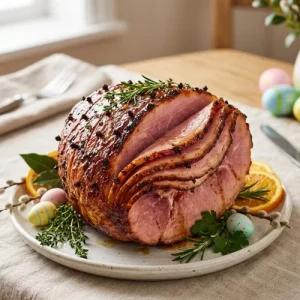
Honey Glazed Ham (Best Easter Dinner Recipe)
Equipment
- Large roasting pan
- Roasting rack
- Heavy-duty aluminum foil
- Sharp carving knife
- Pastry brush
- Meat thermometer
- Medium saucepan
- Cutting board
Ingredients
- 1 whole bone-in ham 8–10 lbs / 3.5–4.5 kg, pre-cooked and cured
- 1 cup 240ml apple juice or apple cider
- 30 –40 whole cloves
- 1 tablespoon Dijon mustard
- ½ cup 170g pure honey
- ½ cup 110g dark brown sugar, packed
- ¼ cup 60g unsalted butter
- 2 tablespoons Dijon mustard
- 1 tablespoon apple cider vinegar
- 1 teaspoon ground cinnamon
- ½ teaspoon ground ginger
- ¼ teaspoon ground cloves
- ¼ teaspoon black pepper
Instructions
Prep the Ham
- Remove ham from refrigerator 1–2 hours before cooking. Preheat oven to 325°F (165°C).
- Line roasting pan with foil. Place rack inside. Pour apple juice into bottom of pan.
- Pat ham dry. Remove rind if present, leaving ¼ inch of fat.
- Score fat in a diamond pattern ½ inch deep, 1 inch apart.
- Stud a whole clove into each diamond intersection.
- Rub Dijon mustard all over the scored surface.
- Place ham cut-side down on rack.
First Bake (Covered)
- Cover loosely with foil tent. Bake at 325°F for 15–18 minutes per pound, until internal temp reaches 120°F (49°C). (Approx. 2–2.5 hours for an 8 lb ham.)
Make the Glaze
- Combine honey, brown sugar, and butter in a saucepan over medium heat. Stir until melted and smooth, about 2–3 minutes.
- Add mustard, vinegar, cinnamon, ginger, cloves, and pepper. Simmer 3–5 minutes until slightly thickened. Remove from heat.
Glaze & Finish
- Remove foil tent. Increase oven to 400°F (200°C).
- Brush a generous coat of warm glaze all over ham.
- Return to oven uncovered. Every 10–15 minutes, brush on another glaze coat.
- Glaze 3–4 times total over 45–60 minutes, until internal temp reaches 140°F (60°C) and exterior is deep caramel brown.
- Remove from oven. Rest 15–20 minutes before carving. Serve warm.
Notes
- Bone-in = more flavor. Always choose bone-in ham for the best results.
- Don’t skip the rest. Resting allows juices to redistribute crucial for moist meat.
- Glaze timing is everything. Only apply glaze in the last 45–60 minutes to prevent burning.
- Use a thermometer. The only reliable way to know your ham is done. Target: 140°F (60°C).
- Leftover ideas: Use leftover ham in sandwiches, omelets, pasta, split pea soup, or fried rice.
- Make-ahead: Prepare the glaze up to 3 days ahead. Store covered in the refrigerator and rewarm before applying.

Perfect holiday recipe! The sweet glaze and step-by-step timing made the ham incredibly tender and flavorful. It’s definitely our new family favorite!