

Easy Thanksgiving Recipes – Homemade Turkey & All the Sides

If you are looking for the most reliable, crowd-pleasing, and truly homemade Thanksgiving recipes all in one place, you have just found them. This complete guide covers everything you need for a perfect Thanksgiving dinner from a beautifully golden roast turkey to creamy mashed potatoes, savory stuffing, rich turkey gravy, green bean casserole, and a silky pumpkin pie that will make everyone ask for seconds.
Whether you are hosting your very first Thanksgiving or you have done it a dozen times, these easy Thanksgiving recipes are tested, trusted, and guaranteed to impress. Every dish on this table is built from scratch, made with real ingredients, and designed to taste like it came straight from a grandmother’s kitchen.
What is a Traditional Thanksgiving Dinner?
Thanksgiving is one of the most beloved food holidays in the United States, celebrated every year on the fourth Thursday of November. It is a day dedicated to gathering around the table with family and friends, expressing gratitude, and enjoying a spectacular spread of comforting, homemade food.
The centerpiece of every traditional Thanksgiving table is the whole roast turkey golden, juicy, and fragrant with herbs surrounded by a generous lineup of sides, sauces, and desserts that have been passed down through generations.
A classic homemade Thanksgiving dinner typically includes a roast turkey, herb stuffing (also called dressing), creamy mashed potatoes with gravy, green bean casserole, cranberry sauce, candied sweet potatoes or yams, dinner rolls, and pumpkin pie for dessert. Some families add macaroni and cheese, corn pudding, or pecan pie to the spread, but the dishes listed above are the true, timeless foundation of any authentic Thanksgiving meal. Every single one of these recipes has a place on this page, explained in full detail so you can make them with confidence.
History and Origin of Thanksgiving Dinner
The roots of Thanksgiving go back to the autumn of 1621, when the Pilgrims of Plymouth Colony shared a three-day harvest feast with the Wampanoag people of Massachusetts. That original meal almost certainly included wildfowl most likely duck or goose rather than turkey alongside corn, shellfish, venison, and local vegetables.
The tradition of a formal national Thanksgiving celebration, however, was not established until 1863, when President Abraham Lincoln declared it a federal holiday during the Civil War as a day of national unity and gratitude.
Over the centuries, turkey became the symbolic centerpiece of Thanksgiving largely due to its size (one bird can feed a whole crowd), its availability in autumn, and its association with American farming culture. Benjamin Franklin famously championed the wild turkey as a symbol of American identity, and by the late 19th century, roast turkey had cemented its place as the undisputed king of the Thanksgiving table
. The side dishes stuffing, potatoes, cranberry sauce evolved alongside the turkey, each one drawing from different regional and immigrant food traditions to create the rich, layered Thanksgiving menu Americans know and love today.
What Does a Perfect Thanksgiving Spread Look Like?
A perfect Thanksgiving spread is an exercise in balance you want rich and creamy alongside bright and tangy, savory and herbaceous alongside sweet and spiced, soft and fluffy alongside crispy and caramelized. The turkey anchors the table with its dramatic golden skin and deeply savory flavor. The stuffing absorbs all of that turkey drippings and butter, becoming wonderfully savory and aromatic.
The mashed potatoes are silky and buttery, the perfect vehicle for thick, glossy gravy. The green bean casserole adds a creamy, crispy-topped vegetable element. The cranberry sauce cuts through all the richness with its bright tartness. And the pumpkin pie spiced with cinnamon, ginger, and nutmeg brings the whole meal to a warm, spiced, satisfying close.
Is Thanksgiving Just About the Turkey?
Turkey is the undisputed star of the Thanksgiving show, but truthfully, many people will admit that the side dishes are what they look forward to most. The stuffing alone is something people talk about all year. Creamy mashed potatoes with homemade gravy are the kind of comfort food that no restaurant dish can replicate.
The green bean casserole invented by Dorcas Reilly at Campbell Soup Company in 1955 has become so beloved that it is virtually inseparable from the holiday. And pumpkin pie is not just a dessert; it is a cultural ritual, a spiced, silky celebration of the autumn harvest. So no Thanksgiving is absolutely not just about the turkey. It is about the entire, glorious, abundant table.
What Makes Thanksgiving Food Different from Everyday Holiday Cooking?
Thanksgiving recipes are distinct from ordinary holiday cooking for several reasons. First, the scale is enormous you are often cooking for 10, 15, or even 20 people at once, which requires careful planning and timing. Second, almost every dish is made from scratch using whole, seasonal ingredients whole turkeys, fresh herbs, real butter, heavy cream, fresh vegetables rather than shortcuts or pre-made components.
Third, the flavor profiles are deeply rooted in autumn’s harvest: warm spices like sage, thyme, rosemary, nutmeg, and cinnamon dominate everything from the turkey seasoning to the pie filling. And fourth, Thanksgiving cooking carries an emotional weight that other meals do not these are recipes tied to memory, tradition, and family identity in a way that makes them uniquely meaningful.
Ingredients You Need
Before you even think about turning on your oven, gather everything you need. Proper preparation is the single biggest secret to a smooth, stress-free, easy Thanksgiving recipe execution. Here is a complete breakdown of ingredients for every dish in this Thanksgiving spread, explained in full detail so you know exactly what you are working with and why each ingredient matters.
For the Herb Butter Roast Turkey
The turkey itself should be a whole fresh or fully thawed turkey, anywhere from 12 to 16 pounds, which is perfect for feeding 10 to 14 people. Kosher salt is essential for dry brining it is coarser than table salt and draws moisture out then back into the meat, creating extraordinarily juicy, flavorful flesh. Unsalted butter is the base for the herb butter that goes both under and over the skin it should be softened to room temperature so it spreads easily and evenly.
Fresh garlic cloves, minced, add a deep savory punch that perfumes the meat as it roasts. Fresh rosemary, fresh thyme, and fresh sage are the holy trinity of Thanksgiving herb flavors they are incomparably more aromatic and complex than dried herbs, and they make the kitchen smell like the holiday itself.
Freshly cracked black pepper adds gentle heat and depth. Olive oil is brushed over the outside of the bird along with the herb butter to help achieve that gorgeous, deeply golden, crackling skin. Inside the turkey cavity you will place halved onion, celery stalks, a whole head of garlic split in half horizontally, fresh herbs, and a halved lemon none of these are eaten, but they steam from the inside and infuse the meat with incredible fragrance. Chicken or turkey broth is poured into the roasting pan to keep the drippings from burning and to form the base of your gravy.
For the Classic Herb Stuffing (Dressing)
Day-old white sandwich bread or a combination of white and sourdough bread, cut into rough cubes, is the soul of homemade stuffing. Stale or oven-dried bread absorbs liquid without turning to mush, giving you stuffing with that ideal combination of crispy-topped and tender-centered texture. Unsalted butter, a generous amount of it, is used to sauté the aromatics and coat every bread cube with richness.
Yellow onion, finely diced, and celery, also finely diced, are the classic stuffing aromatics they soften in butter, turn sweet and translucent, and form the savory base of every bite. Fresh sage is absolutely non-negotiable in traditional stuffing its earthy, slightly peppery, distinctly autumnal flavor is what makes stuffing taste like Thanksgiving. Fresh thyme adds a subtle floral herbaceousness.
Chicken or turkey broth moistens the bread and binds everything together start with less than you think you need and add more gradually, as over-soaked stuffing turns into bread porridge. Eggs beaten into the broth help bind the stuffing and give it a slightly custardy interior texture once baked. Salt, black pepper, and a pinch of celery salt round out the seasoning.
For the Creamy Mashed Potatoes
Russet potatoes or Yukon Gold potatoes are the best choices for mashed potatoes, and each produces a slightly different result. Russets are starchier and produce a fluffier, lighter mash. Yukon Golds are creamier and slightly buttery-tasting on their own, producing a denser, richer mash with a beautiful golden color.
For Thanksgiving, a combination of both gives you the best of both worlds. Unsalted butter and lots of it goes in while the potatoes are still steaming hot so it melts in and coats every starch granule for maximum richness. Whole milk or heavy cream, warmed before adding, creates a silky, smooth, pourable texture. Cold dairy added to hot potatoes makes them gluey and stiff always warm it first.
Sour cream or cream cheese added in a small amount elevates the flavor and gives the mash a subtle tang that balances all the butter. Salt is critical and must be added generously under-salted mashed potatoes taste flat no matter how much butter you add. White pepper rather than black pepper keeps the mash looking pristine and adds a slightly sharper heat.
For the Turkey Gravy
Pan drippings from the roasted turkey are the backbone of any great homemade Thanksgiving gravy they contain concentrated turkey fat and fond (the caramelized brown bits stuck to the pan) that carry more flavor than any store-bought base could dream of. Unsalted butter supplements the fat if the drippings are insufficient.
All-purpose flour is whisked with the fat to create a roux that thickens the gravy smoothly. Chicken or turkey stock is the liquid body of the gravy good quality stock makes a dramatic difference, so use homemade if possible or a quality low-sodium store-bought brand. A splash of dry white wine or apple cider adds brightness and depth. Fresh thyme and bay leaves simmer in the gravy for aromatic complexity. Salt and black pepper season to taste at the end.
For the Classic Green Bean Casserole
Fresh green beans, trimmed and cut into bite-sized pieces, are far superior to canned beans for this dish they hold their texture better and taste cleaner and more vibrant. Condensed cream of mushroom soup is the classic binder, but for a truly homemade version, you can make your own by sautéing mushrooms in butter with garlic, whisking in flour, and finishing with heavy cream.
Whole milk loosens the soup into a sauce. Worcestershire sauce adds a deep, savory, slightly fermented umami note. Soy sauce reinforces the umami further. Garlic powder and onion powder season the sauce. French-fried onions the crispy canned variety are the iconic crunchy topping, but you can also make your own by thinly slicing onions, dredging them in seasoned flour, and frying them until deeply golden and crispy.
For the Homemade Pumpkin Pie
Pure pumpkin puree not pumpkin pie filling, which already contains sugar and spices gives you complete control over the flavor. Canned pumpkin puree is perfectly acceptable and is in fact what most professional pastry chefs use; it has a more consistent flavor and texture than roasted fresh pumpkin. Sweetened condensed milk creates a rich, custardy filling that sets beautifully without being overly firm.
Eggs bind the filling and help it set with a slight wobble in the center, which is exactly what you want. Ground cinnamon, ground ginger, ground nutmeg, ground cloves, and ground allspice are the classic pumpkin pie spice blend together they create that warm, complex, deeply autumnal flavor that is completely inseparable from the Thanksgiving dessert tradition. A pinch of fine salt balances the sweetness and sharpens all the spices. For the crust, a 9-inch deep-dish pie shell homemade with flour, cold butter, ice water, and a pinch of salt, or a good quality store-bought crust cradles the filling and provides the buttery, flaky contrast to the soft, spiced custard interior.
Ingredient Substitutions and Notes
If you cannot find a fresh turkey, a frozen turkey works perfectly just make sure to allow 24 hours of thawing time in the refrigerator for every 4 to 5 pounds of turkey. If you are making homemade Thanksgiving for a smaller crowd, a turkey breast roast (bone-in, 5 to 7 pounds) is an excellent substitute for a whole bird and roasts in about half the time.
For the stuffing, gluten-free bread can replace regular bread without any other changes to the recipe. For the mashed potatoes, oat milk or full-fat coconut milk can replace dairy milk for a dairy-free version, and vegan butter works as a substitute for regular butter. For the pumpkin pie, butternut squash puree is a nearly perfect substitute for pumpkin puree roast it until tender, puree until smooth, and proceed exactly as written.
How to Make a Complete Thanksgiving Dinner (Step-by-Step)
Executing an easy Thanksgiving recipe spread for a crowd requires a clear plan and a realistic timeline. Here is a step-by-step breakdown of how to approach the whole meal, written in the order that makes practical sense for your kitchen.
Step 1: Plan Your Timeline and Prep Work (1 to 3 Days Before)
The single most important thing you can do for a stress-free Thanksgiving is to start early. Two to three days before Thanksgiving, dry brine your turkey. Pat the turkey completely dry with paper towels both inside the cavity and across every inch of the skin. Mix together kosher salt and a small amount of black pepper, then rub this mixture generously all over the turkey, including under the breast skin by gently separating the skin from the meat with your fingers without tearing it.
Place the uncovered turkey on a rack set inside a rimmed baking sheet and refrigerate it uncovered for a minimum of 24 hours and up to 72 hours. The longer it brines, the more flavorful, well-seasoned, and beautifully browned the skin will be. Also two days ahead, cut and dry your bread cubes for the stuffing by spreading them in a single layer on baking sheets and leaving them out overnight, or by baking them in a 300°F oven for about 30 minutes.
Step 2: Roast the Turkey (Thanksgiving Morning)
Remove the brined turkey from the refrigerator at least one hour before it goes into the oven, so it begins cooking at an even temperature throughout. Preheat your oven to 425°F. Make the herb butter by combining softened unsalted butter with minced garlic, chopped fresh rosemary, chopped fresh thyme, chopped fresh sage, salt, and black pepper in a bowl until smooth and fully combined. Use your fingers to gently loosen the skin over the turkey breast and thighs, then push generous amounts of the herb butter directly underneath the skin, pressing and smoothing it over the meat.
Rub the remaining butter all over the outside of the skin, then brush lightly with olive oil. Stuff the cavity with halved onion, celery stalks, a halved head of garlic, a halved lemon, and a bundle of fresh herbs. Tie the legs together with kitchen twine.
Pour two cups of chicken or turkey broth into the bottom of the roasting pan. Roast the turkey at 425°F for the first 30 minutes to blast the skin into a golden start, then reduce the oven temperature to 325°F and continue roasting, basting with the pan drippings every 45 minutes. A 14-pound turkey will take approximately 3 hours at 325°F after the initial blast.
The turkey is done when an instant-read thermometer inserted into the thickest part of the thigh (without touching the bone) reads 165°F. Rest the turkey uncovered for at least 30 to 45 minutes before carving this step is non-negotiable, as it allows the juices to redistribute back into the meat.
Step 3: Make the Stuffing (While the Turkey Roasts)
While the turkey is in the oven, prepare the stuffing. Melt a generous amount of butter in a large skillet or Dutch oven over medium heat. Add the diced onion and celery and cook, stirring occasionally, for about 12 minutes until softened, translucent, and just beginning to turn golden at the edges. Add the minced garlic and cook for one more minute. Add the chopped fresh sage and thyme and stir to combine, letting the herbs bloom in the butter for about 30 seconds. Remove from heat.
In a very large bowl, combine your dried bread cubes with the sautéed vegetable mixture. In a separate bowl, whisk together the chicken broth and beaten eggs, then pour this mixture gradually over the bread, tossing gently as you pour and adding just enough liquid so the bread is moist but not soggy every cube should feel damp but still hold its shape.
Season generously with salt, black pepper, and celery salt. Transfer to a buttered baking dish, dot the top with small cubes of butter, cover tightly with aluminum foil, and bake at 350°F for 30 minutes covered, then uncover and bake for an additional 20 to 25 minutes until the top is beautifully golden and crispy and the interior is set.
Step 4: Make the Mashed Potatoes and Green Bean Casserole
While the stuffing bakes, peel and cut the potatoes into evenly sized chunks and place them in a large pot of cold, generously salted water. Bring to a boil and cook for about 20 minutes until completely tender when pierced with a fork they should offer no resistance whatsoever. Drain the potatoes thoroughly, then return them to the hot pot and cook over low heat for about two minutes, shaking the pot, to steam off any excess moisture.
This step makes a dramatic difference in the texture of the final mash. Rice the potatoes using a potato ricer directly into the pot, or mash them with a hand masher. Add the butter in cubes while the potatoes are steaming hot, then slowly stir in the warmed cream or milk until you reach your desired consistency. Stir in sour cream or cream cheese if using, season aggressively with salt and white pepper, and taste and adjust before serving.
For the green bean casserole, blanch the fresh green beans in boiling salted water for four minutes until just barely tender and still bright green, then drain and transfer to an ice bath to stop the cooking. Mix together the cream of mushroom soup (or homemade mushroom sauce), milk, Worcestershire sauce, soy sauce, garlic powder, and half of the crispy fried onions.
Combine with the green beans, transfer to a baking dish, top with the remaining crispy onions, and bake at 350°F for 25 to 30 minutes until bubbly and the onions on top are deeply golden and crunchy.
Step 5: Make the Turkey Gravy
Once the turkey is out of the oven and resting, pour all the pan drippings through a fine-mesh strainer into a fat separator or a large measuring cup. Let it settle for five minutes so the fat rises to the top. Skim off the fat and set aside about four tablespoons of it. Heat a medium saucepan over medium heat, add the reserved turkey fat and butter, then whisk in the flour and cook the roux for two minutes, stirring constantly, until it smells nutty and turns a light golden color.
Gradually pour in the strained drippings and turkey stock, whisking constantly to prevent any lumps from forming. Add fresh thyme and a bay leaf, bring to a gentle simmer, and cook for eight to ten minutes, stirring frequently, until the gravy is thick enough to coat the back of a spoon. Season with salt, black pepper, and a small splash of Worcestershire sauce.
Step 6: Bake the Pumpkin Pie (The Night Before)
Pumpkin pie is best made the night before Thanksgiving, not only because it frees up oven space on the big day but also because it tastes better after resting overnight in the refrigerator, which gives the filling time to fully set and the flavors time to deepen. In a large bowl, whisk together the pumpkin puree, sweetened condensed milk, eggs, cinnamon, ginger, nutmeg, cloves, allspice, and salt until completely smooth.
Pour the filling into your unbaked pie shell be careful not to overfill it. Bake at 425°F for the first 15 minutes, then reduce the temperature to 350°F and bake for an additional 40 to 50 minutes, until the edges of the filling are set and the center has just a slight wobble when you gently shake the pan. Cool completely at room temperature for at least two hours, then cover loosely and refrigerate overnight. Serve with freshly whipped heavy cream sweetened with a small amount of sugar and a tiny pinch of cinnamon.
Pro Tips for the BEST Thanksgiving Dinner
My Number One Secret for a Stress-Free Thanksgiving
Write a detailed cooking schedule starting from the moment guests arrive and working backward to the day before, two days before, and even three days before. Know exactly what time the turkey goes into the oven based on when you want to eat, factor in the resting time, and build every other dish around that anchor point.
Dishes like pumpkin pie, cranberry sauce, and even the stuffing mixture (unbaked) can be prepared one to two days ahead. Mashed potatoes can be made an hour in advance and kept warm in a slow cooker. This kind of advance planning transforms Thanksgiving from a frantic last-minute scramble into a genuinely enjoyable, relaxed cooking experience.
How to Keep Everything Hot at the Same Time
The biggest logistical challenge of a homemade Thanksgiving spread is getting everything piping hot on the table simultaneously after the turkey has come out of the oven. Here is how to do it: use your oven’s lowest warm setting (around 170 to 200°F) to keep the stuffing and green bean casserole warm after baking.
The mashed potatoes can be kept warm in a slow cooker on the “warm” setting with a little extra butter and cream added to keep them from stiffening. The gravy keeps well over the lowest possible heat on the stovetop, stirred occasionally. And remember a properly rested turkey stays hot for up to an hour under a loose tent of aluminum foil. This means you have a comfortable window to get everything else ready without sacrificing heat.
Common Mistakes to Avoid
One of the most common mistakes people make with Thanksgiving turkey is not thawing it properly a frozen 14-pound turkey requires at least three full days of refrigerator thawing, and failing to plan for this is one of the top reasons Thanksgiving dinners run late. Another frequent mistake is skipping the resting period after roasting cutting into the turkey too soon means all those beautiful, flavorful juices run out onto the cutting board rather than being reabsorbed into the meat.
Do not over-mash the potatoes using a food processor or blender, as this activates the starch and turns them into wallpaper paste always use a ricer or a hand masher. Do not make the stuffing too wet; it should be moist but never sloppy or sodden. And do not skip seasoning at every stage season the turkey generously, season the boiling water for the potatoes, season the gravy, and taste everything before it hits the table.
How to Set a Beautiful Thanksgiving Table
Simple Home Decoration Ideas
You do not need a professional florist or an elaborate budget to set a stunning Thanksgiving table. Start with a simple burlap or neutral linen tablecloth as your base. Fill the center of the table with a long runner of autumn leaves fresh or artificial interspersed with small pumpkins and gourds in varying sizes and shades of orange, gold, cream, and deep green.
Taper candles in warm amber or deep burgundy tones add immediate elegance and a beautiful flicker. Place a small bundle of cinnamon sticks tied with a simple twine bow next to each plate or napkin fold as a fragrant, budget-friendly favor. Mini pumpkins can double as place card holders by writing each guest’s name on a small tag and tucking it into the pumpkin stem.
Professional Finish Tips
For a more polished, elevated look, invest in a set of white or cream dinner plates the neutral backdrop makes the colors of the Thanksgiving food pop dramatically. Use cloth napkins folded into a simple bishop’s hat fold or a basic roll tied with a sprig of fresh rosemary or thyme.
Place the turkey on a large wooden board surrounded by fresh herb sprigs, sliced citrus, and halved pomegranates for a dramatic, magazine-worthy presentation that takes no more than five minutes to assemble. Serve the gravy in a warmed gravy boat rather than ladling it directly from the pot, and present the mashed potatoes in a rustic cast-iron skillet or a beautiful white serving bowl with a well of melted butter pooled in the center and a sprinkle of fresh chives.
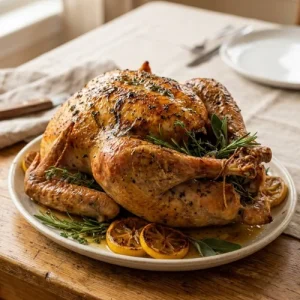
Best Herb Butter Roast Turkey (Easy Thanksgiving Recipe)
Equipment
- Large roasting pan with a rack
- Instant-read meat thermometer
- Kitchen twine
- Pastry brush
- Fat separator or large measuring cup
- Medium saucepan
- Large Mixing Bowl
- Fine mesh strainer
- Carving board and sharp carving knife
Ingredients
- 1 whole turkey 12–16 lbs, fully thawed
- 3 tbsp kosher salt for dry brine
- 1 tsp black pepper for dry brine
- 1 stick ½ cup unsalted butter, softened
- 5 garlic cloves minced
- 2 tbsp fresh rosemary finely chopped
- 2 tbsp fresh thyme leaves
- 2 tbsp fresh sage finely chopped
- 1 tsp black pepper
- 1 tbsp olive oil
- 1 medium yellow onion halved
- 3 stalks celery
- 1 whole head of garlic halved horizontally
- 1 lemon halved
- Fresh herb bundle rosemary, thyme, sage
- 2 cups chicken or turkey broth for roasting pan
- All drippings from the roasting pan
- 3 tbsp unsalted butter
- ¼ cup all-purpose flour
- 3 –4 cups chicken or turkey stock
- 2 sprigs fresh thyme
- 1 bay leaf
- Salt and black pepper to taste
- 1 tsp Worcestershire sauce
- 1 lb day-old white or sourdough bread cut into ¾-inch cubes and dried
- ½ cup 1 stick unsalted butter
- 1 large yellow onion finely diced
- 4 stalks celery finely diced
- 4 garlic cloves minced
- 3 tbsp fresh sage chopped
- 1 tbsp fresh thyme leaves
- 2 cups chicken broth
- 2 large eggs beaten
- 1 tsp salt
- ½ tsp black pepper
- ½ tsp celery salt
- 3 lbs Yukon Gold potatoes peeled and cubed
- ½ cup 1 stick unsalted butter, cubed
- ¾ cup heavy cream or whole milk warmed
- 3 tbsp sour cream
- 1½ tsp salt plus more to taste
- ½ tsp white pepper
- 1½ lbs fresh green beans trimmed and cut into 2-inch pieces
- 1 can 10.5 oz condensed cream of mushroom soup
- ¾ cup whole milk
- 1 tbsp Worcestershire sauce
- 1 tsp soy sauce
- ½ tsp garlic powder
- ½ tsp onion powder
- Salt and pepper to taste
- 2⅔ cups French-fried crispy onions divided
- 1 can 15 oz pure pumpkin puree
- 1 can 14 oz sweetened condensed milk
- 2 large eggs
- 1 tsp ground cinnamon
- ½ tsp ground ginger
- ¼ tsp ground nutmeg
- ¼ tsp ground cloves
- ¼ tsp ground allspice
- ½ tsp fine salt
- 1 unbaked 9-inch deep-dish pie shell
Instructions
For the Turkey
- Dry brine (24–72 hours before): Pat turkey completely dry inside and out. Mix kosher salt and black pepper. Rub all over turkey and under breast skin. Place uncovered on a rack on a baking sheet in the refrigerator for 24 to 72 hours.
- Prep: Remove turkey from refrigerator 1 hour before roasting. Preheat oven to 425°F.
- Herb butter: Mix softened butter, garlic, rosemary, thyme, sage, and black pepper until smooth. Push under breast and thigh skin. Rub remaining butter all over outside. Brush with olive oil.
- Stuff cavity: Place onion, celery, halved garlic head, lemon, and herb bundle inside the cavity. Tie legs with kitchen twine. Pour 2 cups broth into roasting pan.
- Roast: Roast at 425°F for 30 minutes. Reduce to 325°F. Continue roasting, basting every 45 minutes, until a thermometer in the thickest part of the thigh reads 165°F (approximately 3 hours at 325°F for a 14-lb turkey).
- Rest: Transfer turkey to carving board. Tent loosely with foil. Rest for 45 minutes. Do not skip this step.
- Carve and serve.
For the Turkey Gravy
- Strain pan drippings through a fine-mesh strainer into a fat separator. Skim off and reserve 4 tbsp fat.
- Heat saucepan over medium heat. Add fat and butter. Whisk in flour. Cook 2 minutes until golden.
- Gradually whisk in drippings and stock. Add thyme and bay leaf.
- Simmer 8–10 minutes, stirring, until thick and glossy. Add Worcestershire, salt, and pepper. Remove bay leaf. Keep warm.
For the Stuffing
- Preheat oven to 350°F. Butter a 9×13-inch baking dish.
- Melt butter in large skillet over medium heat. Cook onion and celery 12 minutes until soft. Add garlic, cook 1 minute. Add sage and thyme, stir 30 seconds.
- Combine bread cubes and sautéed vegetables in large bowl. Whisk broth and eggs together, pour gradually over bread, tossing to coat evenly until moist but not soggy. Season with salt, pepper, and celery salt.
- Transfer to prepared dish. Dot with additional butter. Cover with foil. Bake 30 minutes covered. Uncover and bake 20–25 minutes more until golden and set.
For the Mashed Potatoes
- Place potatoes in large pot with cold, generously salted water. Bring to boil, cook 20 minutes until completely fork-tender.
- Drain thoroughly. Return to pot over low heat, shake for 2 minutes to evaporate excess moisture.
- Rice potatoes into pot. Add butter cubes while hot. Stir in warmed cream gradually until smooth and silky. Mix in sour cream. Season with salt and white pepper. Taste and adjust.
For the Green Bean Casserole
- Preheat oven to 350°F. Blanch green beans in boiling salted water 4 minutes. Transfer to ice bath, drain well.
- Mix mushroom soup, milk, Worcestershire, soy sauce, garlic powder, onion powder, salt, and pepper. Combine with green beans and 1⅓ cups crispy onions.
- Transfer to a 9×13-inch baking dish. Top with remaining 1⅓ cups crispy onions.
- Bake 25–30 minutes until bubbly and onions are golden and crunchy.
For the Pumpkin Pie
- Preheat oven to 425°F.
- Whisk pumpkin, condensed milk, eggs, all spices, and salt until completely smooth. Pour into unbaked pie shell.
- Bake 15 minutes at 425°F. Reduce to 350°F and bake 40–50 minutes until edges are set and center has a slight wobble.
- Cool at room temperature 2 hours. Refrigerate overnight. Serve with whipped cream.
Notes
- Make-ahead plan: Dry brine turkey up to 3 days ahead. Make pumpkin pie up to 2 days ahead. Prepare bread cubes for stuffing up to 1 week ahead. Make cranberry sauce up to 10 days ahead.
- Turkey temperature: Always use an instant-read thermometer. Never guess. The thigh (not the breast, not near the bone) should read 165°F.
- Don’t skip resting: A 45-minute rest is not optional. It is what separates juicy turkey from dry turkey.
- Warm your dairy: Always warm the cream or milk before adding to mashed potatoes. Cold dairy makes gluey mash.
- Stuffing moisture: Add broth gradually. Moist but never soggy. Each bread cube should feel damp but hold its shape.

A masterpiece of a holiday guide! Every recipe is clear, reliable, and perfectly timed to make hosting a massive dinner completely effortless.