

Easy Asian Sponge Cake Recipe Fluffy, Jiggly & Cottony

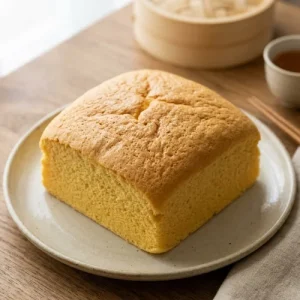
The first time I pressed my finger into a freshly baked Asian sponge cake and watched it spring back with a soft, jiggly bounce, I actually laughed out loud. It was so light it barely felt like cake at all, more like a sweet, edible cloud. That cottony, melt on the tongue texture is the whole reason these cakes have such a devoted following.
This Asian sponge cake recipe gives you that exact bakery quality result at home, tall, tender, and wobbly, with a delicate sweetness that never feels heavy. If you have ever wondered how to get that signature fluffy crumb, you are in exactly the right place. Let me walk you through every step.
How to Make Asian Sponge Cake (Step Overview)
The process has three clear phases, and being organized makes it smooth. You build the batter base, fold in the meringue, then bake low and slow. Here is each stage.
Preparing the Batter Base
Start by whisking the egg yolks with milk, oil, and vanilla until smooth, then sift in the cake flour and mix gently until just lump free. This light, pourable yolk batter is the base that the meringue will lift. Keep it smooth but do not overwork it.
Building & Folding the Meringue
Whip your egg whites with the stabilizer, adding the sugar gradually, until you reach those soft to medium peaks. Then fold the meringue into the yolk batter in batches, starting with a third to lighten the mixture before gently folding in the rest. Protect the air at all costs.
Baking Low & Slow
Pour the batter into a lined pan, sit it in a tray of hot water, and bake at a low temperature for around an hour. The low, moist heat sets the cake slowly and evenly, giving you that tall, tender, jiggly result. Resist the urge to rush it with higher heat.
Asian Sponge Cake Recipe

Equipment
- 8-inch round cake pan
- Electric hand mixer or stand mixer
- 2 large mixing bowls
- Rubber spatula
- Whisk
- Sieve
- Larger baking tray
- Parchment Paper
- Cooling rack
Ingredients
- 5 large egg yolks
- 60 ml ¼ cup milk
- 50 ml ¼ cup vegetable oil or melted butter
- 90 g ¾ cup cake flour, sifted
- 1 tsp vanilla extract
- 5 large egg whites
- 70 g ⅓ cup granulated sugar
- ¼ tsp cream of tartar or ½ tsp lemon juice
Instructions
- Prepare. Preheat the oven to 150°C (300°F). Line the bottom of an 8-inch cake pan with parchment paper, but do not grease the sides. Boil water for the water bath.
- Make the egg yolk batter. In a large bowl, whisk the egg yolks lightly. Add the milk, oil (or melted butter), and vanilla, and whisk until smooth. Sift in the cake flour and gently whisk until just combined and lump-free. Set aside.
- Make the meringue. In a clean, dry bowl, beat the egg whites with the cream of tartar until foamy. Gradually add the sugar in 3 batches while beating. Continue until soft to medium peaks form, where the tips curl slightly rather than standing stiff.
- Fold the batter. Add one-third of the meringue to the yolk batter and gently mix to lighten it. Add the remaining meringue in two batches, folding gently with a spatula. Fold just until combined, without stirring or deflating the air.
- Bake in a water bath. Pour the batter into the prepared pan and tap lightly to release large bubbles. Place the cake pan inside a larger tray and pour hot water into the tray, about 2 to 3 cm deep. Bake for 55 to 60 minutes, until the top is golden and springs back when lightly touched.
- Cool. Remove from the oven and gently drop the pan from a small height to prevent shrinking. Cool the cake in the pan, or invert it on a rack, for about 30 minutes before removing. Slice with a serrated knife using a gentle sawing motion.
Notes
- Use cake flour for the lightest texture, since its low protein keeps the crumb soft. If unavailable, replace 2 tbsp of all-purpose flour per cup with cornstarch.
- The meringue is everything. Aim for soft to medium peaks. Over-whipped meringue causes cracks, while under-whipped causes a dense, wet cake.
- Make sure the bowl and beaters are completely clean and grease-free, since any fat stops the egg whites from whipping.
- Fold gently and patiently. Aggressive mixing knocks out the air that makes the cake rise and stay fluffy.
- Do not open the oven during the first 40 minutes, since sudden temperature changes cause the cake to collapse.

This cake turned out unbelievably soft and fluffy. The texture was so light and jiggly, just like the bakery version. Easily the best Asian sponge cake recipe I’ve tried!
Baked this today and it came out spectacularly fluffy with that perfect signature bounce! The detailed baking tips are incredibly helpful.
This is the ultimate guide for achieving that flawless, cloud-like texture at home! My sponge cake baked up perfectly bouncy and incredibly soft.
This recipe is a total game-changer, yielding the softest, airiest sponge cake with that perfect signature jiggle! Highly recommend for anyone craving that cottony texture.
A masterpiece of a recipe that delivers that dreamy, jiggly texture effortlessly! The step-by-step breakdown is absolutely foolproof.
Finally found the perfect recipe for that signature cottony bounce and delicate sweetness! The detailed meringue tips are an absolute lifesaver.
Incredible recipe! The water bath technique gave me that perfect bakery-style jiggle and a crumb that practically melts in your mouth.
Brilliant recipe with spot-on instructions, resulting in a perfectly bouncy and airy cake that isn’t overly sweet! Definitely my new go-to dessert.
Such a fantastic guide, my cake turned out incredibly tall, tender, and perfectly jiggly! The step-by-step breakdown makes this bakery-quality treat so easy to bake at home.
This is hands down the best guide for achieving that melt-in-your-mouth, cottony texture! The cake turned out beautifully tall and light without being too sweet.